Olive oil · EVOO
Bulk Extra Virgin Olive Oil for Food Manufacturers
Cold-extracted, unrefined and flavour-forward - the grade you choose when the olive oil is meant to be tasted.
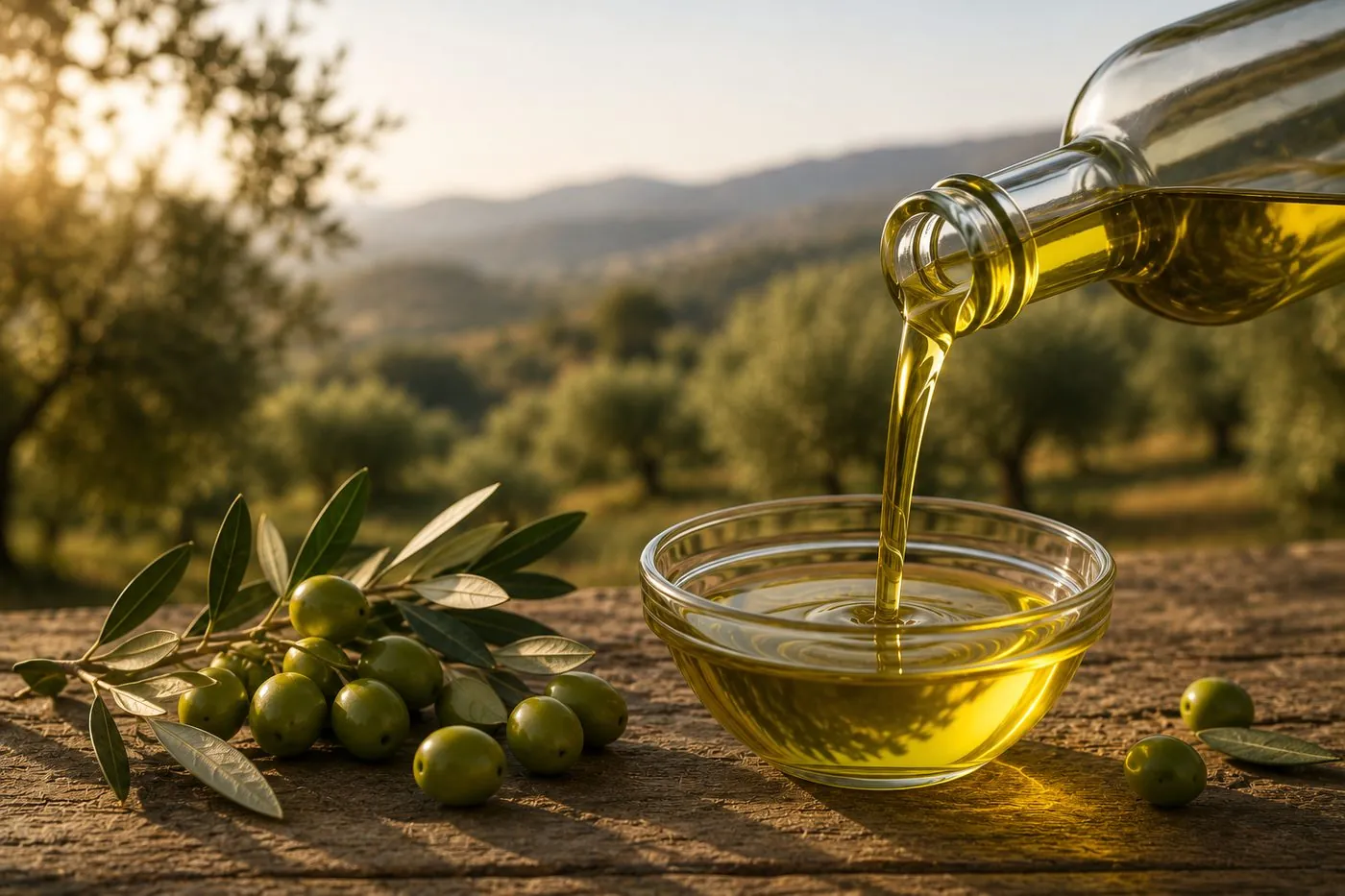
Dressings, finishing & flavour-forward products
Why buyers choose this grade
Extra virgin olive oil is produced by mechanical (cold) extraction only - no heat treatment, no solvents, no refining. That is what preserves its fruity aroma, its natural polyphenols, and the peppery or bitter notes that define a good EVOO. Buyers choose it when the oil is meant to be tasted: it carries flavour into the finished product rather than disappearing into it.
Our flagship extra virgin is sourced from the Peloponnese and Crete in southern Greece — two of the world's most respected olive regions, dominated by the high-polyphenol Koroneiki variety and celebrated PDO origins such as Kalamata, Kolymvari and Sitia. The specific origin and harvest year are confirmed on your certificate of analysis. More on our Greek origins →
Representative characteristics
| Free acidity (as oleic) | ≤ 0.8% |
|---|---|
| Peroxide value | ≤ 20 meq O2/kg |
| Extraction | Mechanical / cold, unrefined |
| Flavour | Fruity; may be bitter or peppery |
| Smoke point | ~375-405 °F (190-205 °C) |
| Origin | Mediterranean, to specification |
| Shelf life | ~18 months |
Representative values to IOC/EU grade standards. Actual values are confirmed on each lot's certificate of analysis.
When to choose EVOO
Choose extra virgin when flavour and positioning matter - vinaigrettes, marinades, dips, finishing oils and premium prepared foods. For high-heat frying or a neutral base, refined olive oil or olive-pomace oil is more economical and more heat-stable. See the grades guide for the full comparison.
Applications
Supply, formats & lead time
Sourced to your grade and origin from Mediterranean production, and delivered across North America. Formats and minimums depend on product, origin, volume and destination; lead time depends on the same factors.
Documentation
Orders ship with a representative or lot-specific certificate of analysis, as applicable. A technical data sheet, safety data sheet, allergen & origin statement, and organic or origin certificates where applicable are provided during qualification.
How qualification works
Sample → documentation review → commercial quote → production trial → contract. We can provide specifications and a sample on request so your team can approve the grade against your own line.
Frequently asked questions
What makes an oil extra virgin?
It is produced by mechanical (cold) extraction only — no heat treatment, no solvents, no refining — with free acidity of no more than about 0.8% under IOC/EU standards.
Where does your extra virgin olive oil come from?
The Peloponnese and Crete, dominated by the high-polyphenol Koroneiki variety. The specific origin and harvest year are confirmed on the certificate of analysis.
What is it best used for?
Dressings, vinaigrettes, marinades, finishing oils and premium prepared foods — where the oil is meant to be tasted.
What is the smoke point?
Representative smoke point around 375–405 °F; for high-heat or neutral uses, refined or pomace oil is more economical.
What formats do you supply?
Tote/IBC, flexitank, tanker and drum; formats and minimums depend on product, origin, volume and destination.
How is grade and authenticity verified?
Against recognised standards (IOC/Codex), with a representative or lot-specific certificate of analysis, as applicable and origin documentation.
Ready to talk pricing?
Send the oil, approximate volume, format and destination — a founder-led, Chicago-based team follows up on next steps.